
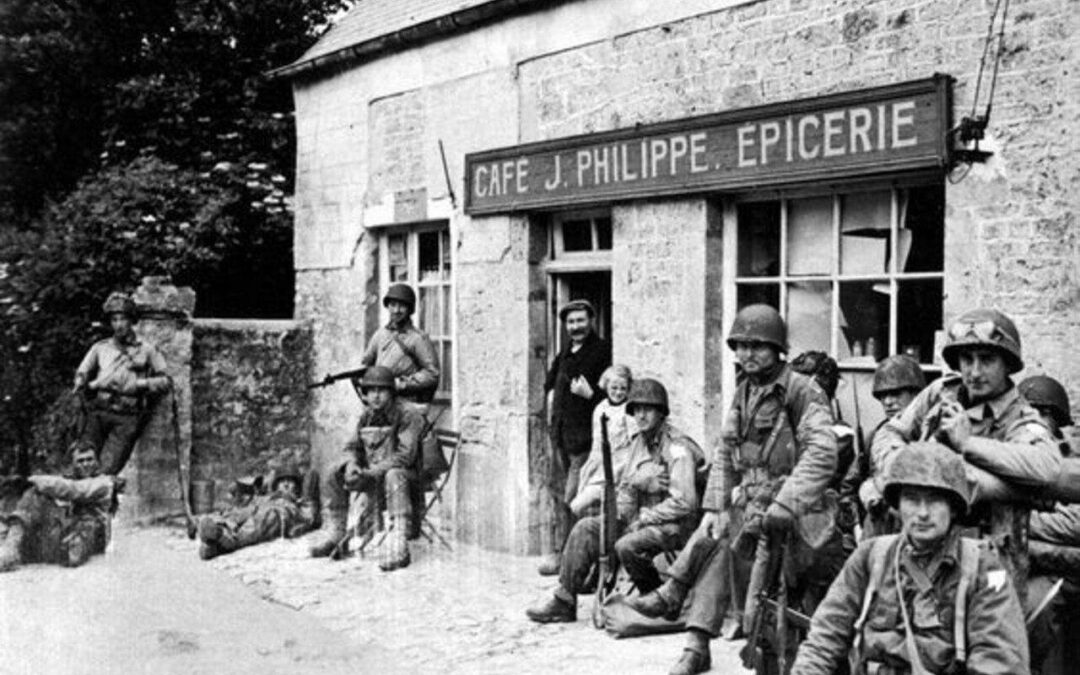
For many American visitors, a journey to Normandy begins long before they arrive in France.
It begins with a name.
A grandfather who rarely spoke about the war. A great-uncle whose photograph has been kept in a family album for decades. A story about Omaha Beach, a paratrooper landing somewhere in Normandy, or a soldier who never came home.
Sometimes the family knows a great deal.
Sometimes all that remains is a photograph, a military patch, a letter or a few sentences passed from one generation to the next.
Visiting Normandy can be an opportunity to reconnect those fragments of family memory with the places where history actually happened.
And the first step is surprisingly simple:
Start with what you already have.
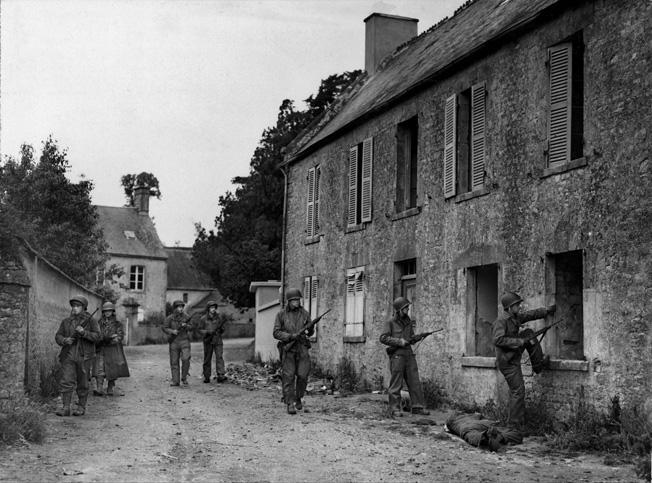
Start with your family archives
Before traveling to Normandy, gather as much information as possible about your relative.
You don’t need to begin with a complete military file.
Look through family albums, boxes of documents and old correspondence. Write down the soldier’s full name, branch of service and any unit information you can identify.
Military paperwork, discharge documents, photographs, medals, letters, newspaper articles and even envelopes can contain useful clues.
Pay particular attention to numbers and insignia.
A division, regiment, battalion or company can completely change the direction of the research.
Because knowing that someone “fought in Normandy” is only the beginning.
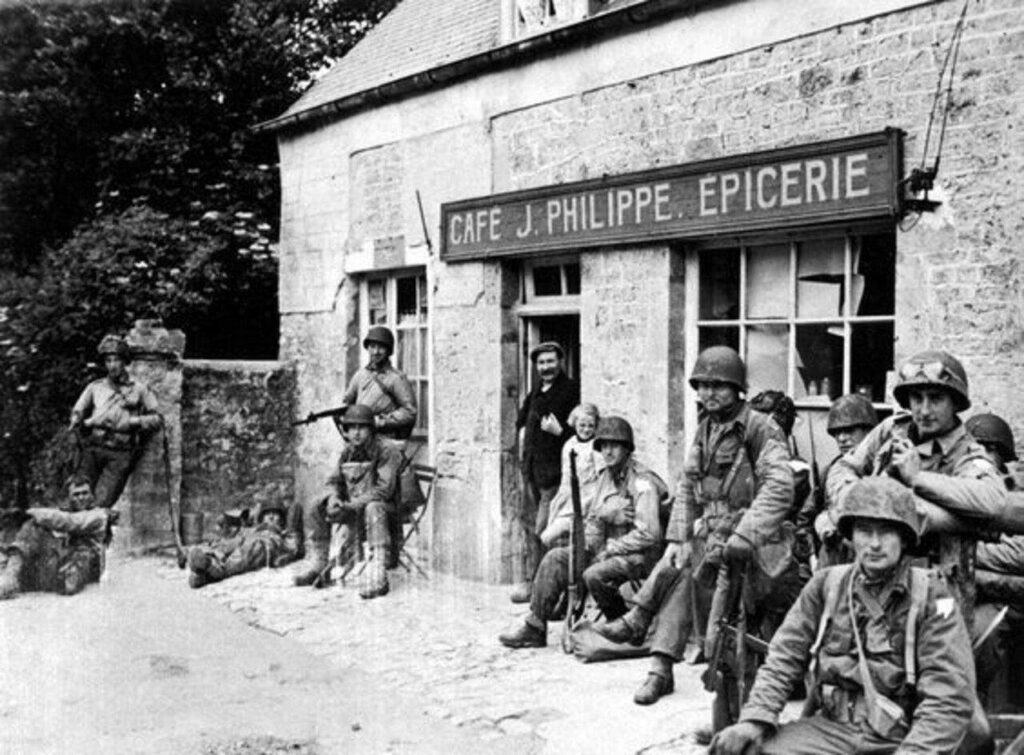
Find the unit
One of the most important questions is:
What unit was he serving with?
D-Day was an enormous military operation involving many different units across a vast battlefield.
Two American soldiers who were both in Normandy on June 6, 1944 may have experienced completely different wars.
One might have landed on Omaha Beach.
Another on Utah Beach.
Another might have parachuted into the Norman countryside during the night.
And many thousands more arrived after D-Day and fought during the Battle of Normandy.
Once a soldier’s unit is known, unit histories, military records and historical maps may help reconstruct where that unit operated.
Little by little, the story begins to acquire a geography.
A beach.
A village.
A road.
A field.
A crossroads.
Places that mean almost nothing on an ordinary tourist map can suddenly become important to one particular family.
Don’t assume your relative landed on Omaha Beach
For American visitors, Omaha Beach has understandably become one of the great symbols of D-Day.
But not every American serviceman who fought in Normandy landed there.
American forces landed on both Omaha and Utah Beaches. Airborne divisions operated behind the beaches, while many other units entered Normandy during the days and weeks that followed.
If your goal is to understand your relative’s experience, his journey should determine the itinerary rather than a checklist of famous D-Day landmarks.
That can lead to an unexpected discovery.
The most important place of your entire trip may not be a famous battlefield.
It might be a tiny Norman village.
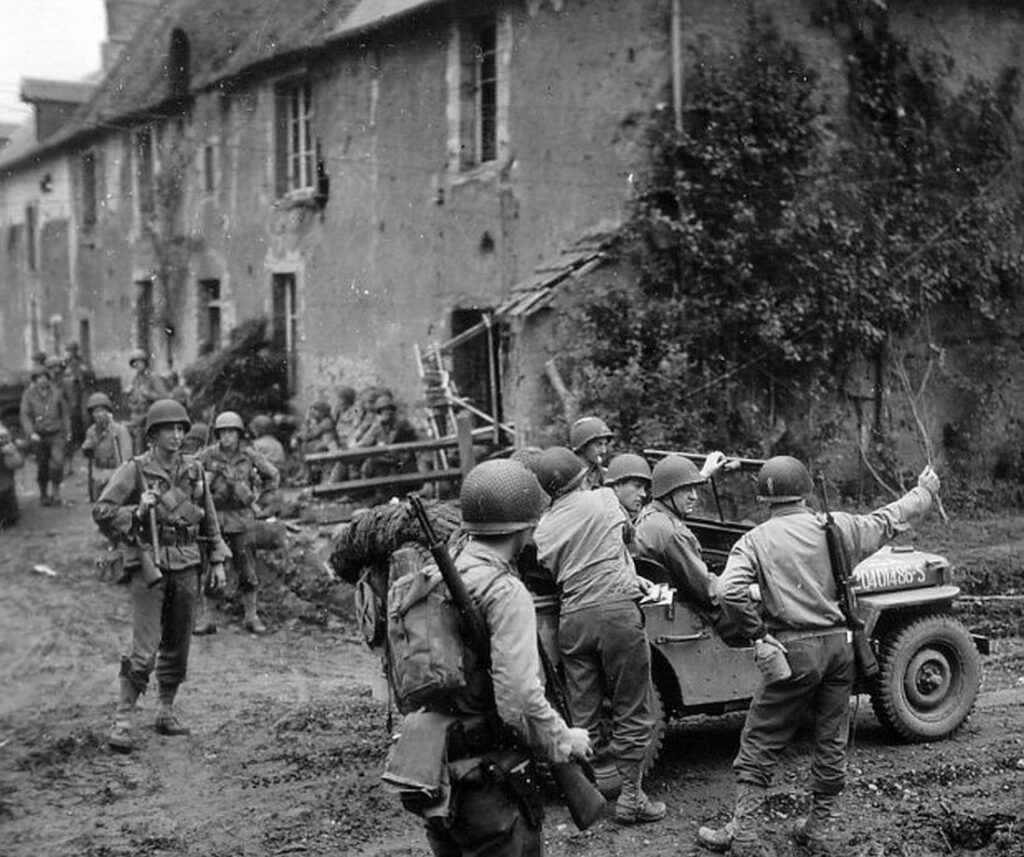
From a military record to a real landscape
This is where historical research becomes particularly moving.
Imagine reading the name of a village in a wartime document at home in the United States.
It is simply a word on a page.
Then you come to Normandy.
You see the church tower.
You walk along the road.
You look at the surrounding fields and hedgerows.
Suddenly you can understand the landscape that the men described in their reports and letters.
This is one of the reasons battlefield guides increasingly offer personalized tours built around individual soldiers and family connections. Some Normandy specialists use military records, maps and unit histories specifically to reconstruct a serviceman’s journey.
It turns military history into something much more personal.
Historical research also means accepting uncertainty
There is an important rule when reconstructing someone’s wartime journey:
We should never invent what the evidence cannot tell us.
A unit’s records may establish that a company was operating in a particular area on a particular day.
That does not necessarily mean we can identify the exact spot where one soldier stood at 10:15 that morning.
Documents can also be incomplete.
Sometimes we know.
Sometimes the evidence allows us to say something is probable.
And sometimes the most accurate answer is simply:
We don’t know.
That uncertainty is part of serious historical research.
A family story does not become less meaningful because we refuse to fill its missing pages with fiction.
Bring photographs with you
If you have family photographs or documents, bring digital copies to Normandy.
Do not risk traveling with fragile originals.
A photograph that has spent eighty years inside a family album can take on a completely different meaning when it is viewed in the landscape connected with the person in it.
Old maps can do the same thing.
Comparing the wartime landscape with the Normandy of today helps bridge the distance between past and present.
It is no longer simply:
“This happened in Normandy.”
It becomes:
“This happened here.”
What if your relative is buried in Normandy?
For some families, the journey eventually leads to the Normandy American Cemetery overlooking Omaha Beach.
For others, their relative survived the war and returned to the United States.
Both stories matter.
D-Day history is not only the story of those who died.
It is also the story of the men who survived, continued fighting across Europe and eventually returned home carrying experiences that many of them rarely discussed.
Following someone’s footsteps can therefore be meaningful even when there is no grave to visit.
Make the journey part of your family’s history
A family-history visit to Normandy is different from an ordinary battlefield tour.
You may still visit Omaha Beach, Utah Beach, German defensive positions, museums or the American Cemetery.
But the question guiding the day has changed.
Instead of asking:
“What are the most famous D-Day sites?”
you are asking:
“Which places help me understand his story?”
Sometimes the answer leads away from the famous monuments and into the Norman countryside.
And that may be precisely where the strongest connection happens.
You stand beside a road.
You look across a field.
You hold an old photograph.
And for the first time, a story you have heard throughout your life has a landscape.
Planning a WWII family-history visit to Normandy?
If a relative served in Normandy during World War II, tell me about him when you contact me.
Send me the information you already have, such as his full name, unit and any documents or photographs that may help identify his connection to Normandy.
I can then tell you whether his story could be incorporated into your guided visit and what may be possible within your itinerary.